

Try CBD for menstrual cramps with Kush Queen Shop. See what research says and find a better way to manage cycle discomfort today.
Please confirm that you are 18 years of age or older.
You must be of legal age in your respective country for entry. By entering you accept our terms and conditions and our privacy policy.


Key Takeaways:
- Understanding the Root of Menstrual Pain: Menstrual cramps are driven by internal processes like uterine contractions, inflammation, and hormonal shifts. Knowing these factors can help guide more supportive relief options.
- CBD’s Potential Role in Symptom Support: Early research suggests CBD may help with pain signaling and inflammation, which are key parts of menstrual discomfort. While studies are still growing, many people include it in their routines.
- Consistency and Product Quality Matter: Using well-formulated CBD products with accurate dosing can shape your overall experience. Building a steady routine often leads to more noticeable and manageable results.
Tired of cramps that seem to take over your entire day, making even simple tasks feel like too much? For many, menstrual discomfort goes beyond a dull ache and turns into a cycle of tension, fatigue, and frustration. It can feel like your body hits pause on everything else, demanding your full attention.
At Kush Queen Shop, we’ve spent more than 10 years shaping cannabis wellness through products built on California’s strict compliance and testing standards. That experience shows up in our consistent dosing, carefully refined formulas, and small-batch approach to things like our CBD gummies, crafted with traditional Italian techniques and natural ingredients. Everything we create is designed to feel approachable while still delivering a level of quality people can rely on.
In this piece, we break down what current research says about CBD for menstrual cramps, how it may support your body during your cycle, and what you should know before adding it to your routine.
Menstrual cramps can feel confusing, especially when the intensity shifts from one cycle to the next. There’s a lot happening behind the scenes in your body that shapes how that pain shows up and how strong it feels. Understanding what’s going on can make it easier to explore supportive options later on:
Your body releases prostaglandins to help the uterus contract and shed its lining during your period. Higher levels of these compounds can lead to stronger, more frequent contractions, which is where that deep cramping sensation comes from. The more intense the contractions, the more likely you are to feel sharp or lingering pain.
Ready to Feel Better?
Explore our full line of premium CBD & THC wellness products.
Related Articles
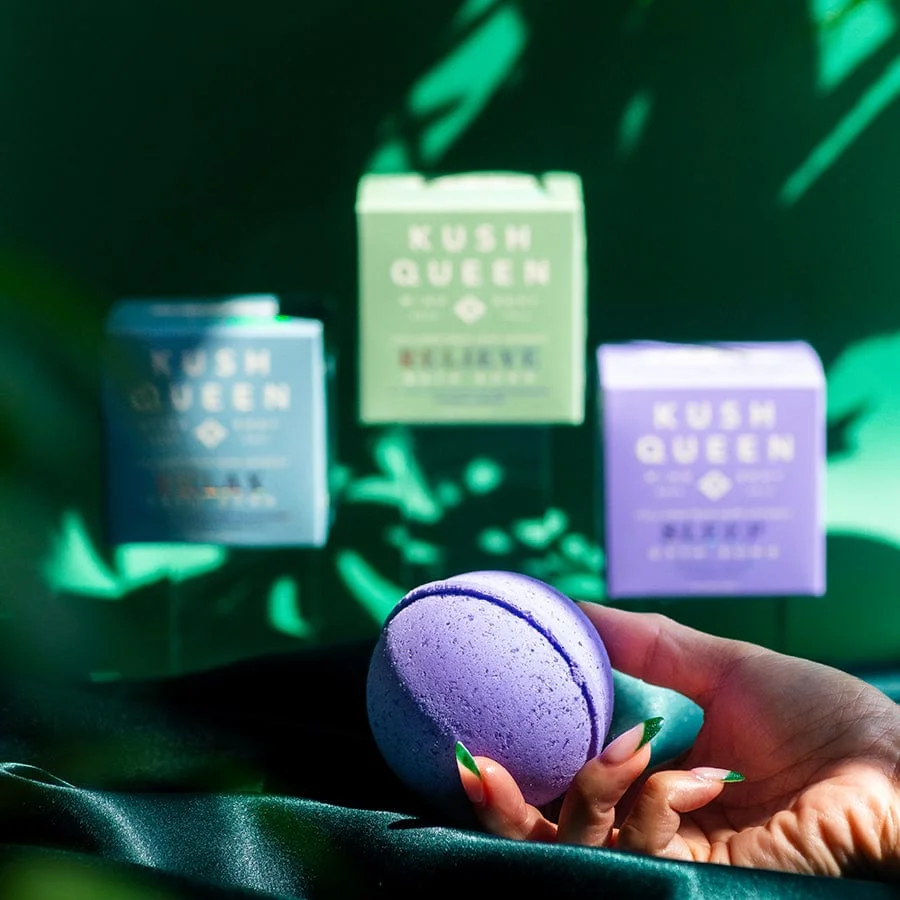
Kush Queen Shop vs. Naturecan Australia: The Ultimate CBD Guide
Looking for the best CBD oil or bath bombs in Australia? Read our comparison of Kush Queen Shop and Naturecan AU to check shipping times, customs risk, and bioavailability.
Read More →
CBD Gift Guide 2026
The ultimate CBD gift guide — top cannabis gifts for wellness lovers, stoners & self-care enthusiasts. Organized by budget & recipient. Gummies, bath.
Read More →![CBD Setting Spray: 3 Things You Need to Know [Beauty]](/images/Kush-Queen-CBD-Setting-Spray_6de346f4-4a23-473f-b9b9-044964a47600_1200x1200.webp)
CBD Setting Spray: 3 Things You Need to Know [Beauty]
CBD in setting spray? Here's what you need to know about this cannabis beauty trend. How nano-CBD works on skin, benefits for inflammation & whether.
Read More →